
Nextgreen is committed to conducting its operations in an environmentally responsible manner while supporting the transition towards a circular and low-carbon economy. Our environmental management approach focuses on key areas that are material to our business, namely Water Management, Pollution, Waste and Environmental Compliance, Biodiversity, and Climate Change.
Through continuous improvement initiatives, operational controls and stakeholder engagement, we strive to minimise environmental impacts, promote resource efficiency, prevent pollution, protect natural ecosystems and strengthen our resilience to climate-related risks and opportunities.
Our commitment is guided by the Nextgreen Environmental Policy, which outlines the Company’s environmental objectives, principles and responsibilities in ensuring compliance with applicable regulations, preventing pollution, conserving resources and driving continual improvement in environmental performance.
Nextgreen is committed to expanding ISO 14001:2015 certification across its operational sites. As of FY2025, NGPP is certified under ISO 14001:2015, covering 33% of operational sites with significant environmental aspects. The Group will continue to assess opportunities to extend certification to other operational entities, including NGF, as part of its ongoing efforts to strengthen environmental management practices and increase certification coverage across its operations.
In 2025, Nextgreen entered into a partnership with the Malaysian Sustainable Palm Oil (“MSPO”) certification body to strengthen the credibility of the MSPO Chain of Custody for Oil Palm Biomass (MS 2751:2022).
Water is a critical resource in Nextgreen’s manufacturing operations, particularly at the Nextgreen Pulp and Paper Plant (NGPP), where it is extensively used in production processes. We are committed to managing water responsibly by monitoring consumption, improving water-use efficiency to reduce water consumption and exploring to reuse of treated water where practicable to support sustainable operations and minimise environmental impact.
As Nextgreen continues to grow, these water management initiatives will be progressively extended across other operating entities, taking into consideration the maturity and operational readiness of each facility. The Company adopts a phased approach whereby process optimisation, operational monitoring and regulatory compliance are prioritised before implementing specific water reduction initiatives.
Maintain treated wastewater quality at Standard A requirements and achieve 100% regulatory compliance with applicable wastewater discharge standards.
Water Management Initiatives:
Based on a basin-level assessment conducted in 2026 using the WWF Risk Filter Suite v3.0 (Water Risk Filter), developed by the World Wide Fund for Nature (WWF), the Group’s operations (100%) are located in an area assessed as having a very low risk relating to water availability, drought and water quality, indicating adequate water resources and generally favourable water conditions for operations. While overall water-related risks remain low, flooding has been identified as the most significant physical basin risk. The Group continues to monitor water-related risks and implement appropriate management measures to strengthen operational resilience and support sustainable water stewardship. As of June 2026, no material flooding incidents or financial impacts have been recorded. The Group will continue to monitor water-related risks and take appropriate measures to minimise potential impacts and support operational resilience.
This assessment serves as a preliminary baseline based on currently available data and risk assessment tools. The Group will continue to refine its assessment through additional data sources, site-specific information, and recognised methodologies to provide a more comprehensive understanding of water-related risks.
This ongoing enhancement will support improved climate- and water-related risk management and future alignment with IFRS S2 Climate-related disclosures, strengthening decision-making and long-term business resilience.
Table : Risk Assessment by Category for Operational Locations
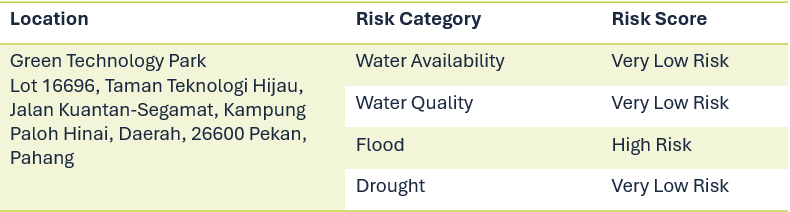
Source: https://riskfilter.org/
In addition to managing water consumption and improving water-use efficiency, the Group places strong emphasis on responsible wastewater management to mitigate environmental impacts and safeguard water resources.
Wastewater generated from operations undergoes treatment prior to discharge, with treated effluent quality monitored to ensure compliance with the Environmental Quality (Industrial Effluent) Regulations 2009 – Standard A requirements.
The treated final discharge point flows into Sungai Terlang, which subsequently joins Sungai Pahang. These practices are managed under the Environmental Management System (EMS) framework and will continue to be enhanced through ongoing monitoring, risk assessment, and continual improvement initiatives to support sustainable water stewardship and operational resilience.
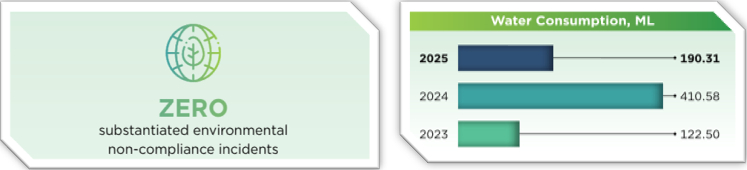
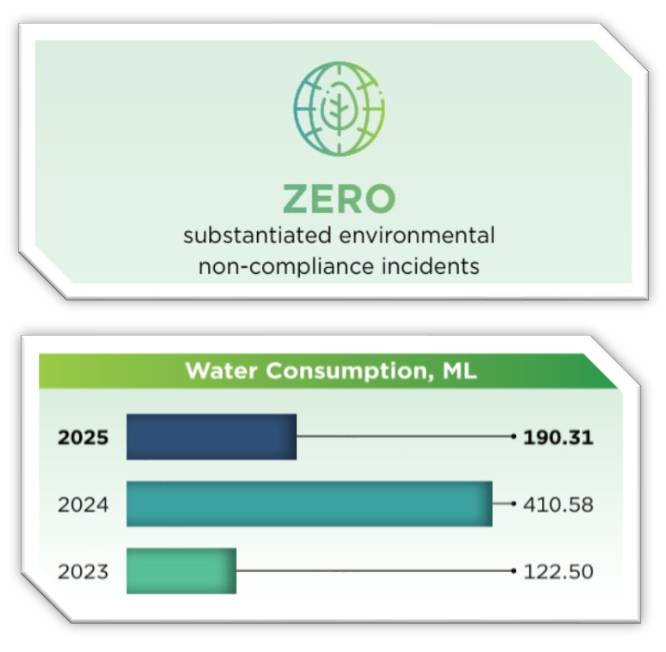
During FY2025, the Group did not record any substantial instances of non-compliance, regulatory penalties, or enforcement actions. Any observations or matters identified were managed through appropriate corrective actions and did not result in penalties or regulatory sanctions.
Table : Source of Water Withdrawal and Effluent Discharge
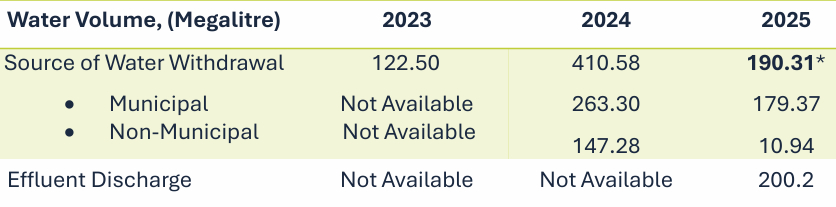
Note: Data on total effluent discharge have been available from 2025 onwards and data on water source withdrawal have been available from 2024 onwards.
*Metering issue, where an on-site meter supplying certain operational processes did not capture data accurately, resulting in incomplete records. The issue has since been identified and rectified, and more reliable and comprehensive data is expected to be available from 2026 onwards.
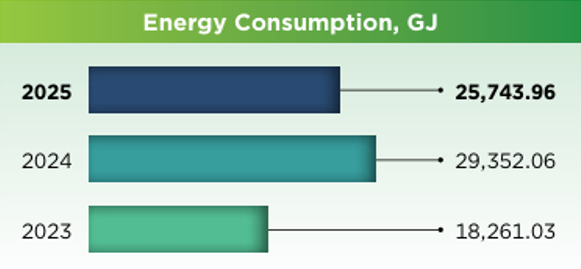
In 2025, Nextgreen recorded a total energy consumption of 25,743.96 GJ across all subsidiaries, representing a 12% reduction compared to the previous year, due to process optimization and proper operational planning.
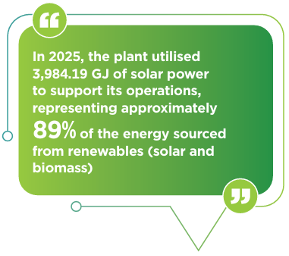
In 2025, we utilised approximately 3,984.19 GJ of solar energy at our plant.
This approach supports Nextgreen’s broader environmental and business goals, ensuring the long-term sustainability of our operations while contributing to the global transition to cleaner energy.
In addition to that, our biomass power generator also supplied 172,477.52 GJ of energy.
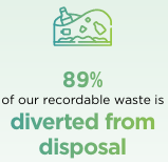
In 2025, the total waste generated was 370.02 MT where 89% of it diverted from disposal.
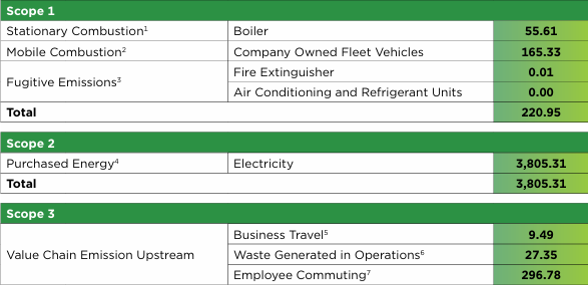
In 2025, the total GHG emission for scopes listed below is 4,359.88 tCO₂eq.
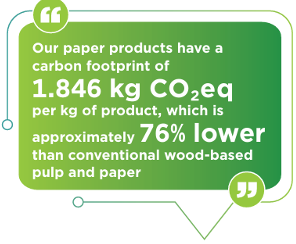
We have monitored our product’s carbon footprint and this has been independently verified by SIRIM Berhad.
This significant reduction reflects the effectiveness of Nextgreen’s innovations towards circular economy, leveraging EFB biomass as a sustainable raw material in low-carbon manufacturing process.
(Actions to strengthen resilience Against climate-related risksand impacts)
Nextgreen adapts to climate-related resource and environmental challenges by reducing its dependence on conventional wood-based raw materials and increasing the use of agricultural biomass as a sustainable alternative. Through its proprietary PRC-RBMP technology, the Company converts Empty Fruit Bunches (EFB) from the palm oil industry into pulp, paper, packaging products, and other value-added materials, creating a more resilient and resource-efficient business model.
The Company’s Green Technology Park (GTP) in Pekan, Pahang supports this adaptation approach through an integrated circular economy ecosystem. Agricultural residues that might otherwise be disposed of are transformed into valuable products, helping to strengthen resource security, optimise resource utilisation, and reduce reliance on virgin materials.
To support the long-term availability of sustainable feedstock, Nextgreen has established strategic partnerships to scale biomass utilisation. Its joint venture with IOI Corporation Berhad enhances access to palm oil biomass resources and supports the development of a sustainable supply chain for green manufacturing. The Company also collaborates with Xiamen C&D Inc. to strengthen commercial capabilities and expand market opportunities for sustainable products, supporting business resilience and the transition towards a more resource-efficient economy.
(Actions to reduce greenhouse gas emissions and minimise contributions to climate change)
In addition to supporting climate adaptation, Nextgreen’s business model contributes to climate change mitigation through the utilisation of agricultural biomass, circular economy practices, and renewable energy adoption. By converting EFB into value-added products, the Company promotes the productive use of biomass resources and reduces dependence on conventional wood-based materials.
At the Green Technology Park, biomass and industrial by-products are utilised within an integrated circular economy ecosystem, where outputs from one process become inputs for another. This approach minimises waste generation, maximises resource utilisation, and supports the transition towards more sustainable production practices.
The Company has also invested in solar photovoltaic (PV) systems to increase the use of renewable energy in its operations, reducing reliance on conventional energy sources and supporting its efforts to lower greenhouse gas emissions.
Internal Carbon Pricing
The Group does not currently implement an internal carbon pricing mechanism, as its operations are not presently subject to mandatory carbon pricing requirements. However, to assess potential climate-related transition risks, the Group has undertaken a shadow carbon pricing assessment using regional carbon pricing benchmarks. These include Thailand’s carbon price of THB 200 per tCO₂e (approximately RM25 per tCO₂e) and Singapore’s carbon tax, which increased from SGD 5 per tCO₂e during 2019–2023 to SGD 25 per tCO₂e in 2024–2025, with further increases planned in the coming years.
Based on these regional benchmarks, the Group has applied an assumed carbon price for scenario analysis purposes to estimate the potential financial impact of its greenhouse gas emissions. The estimated carbon cost exposure for Scope 1 emissions, or Scope 1 and Scope 2 emissions combined, is presented below 0.1% from sales revenue of 2025.
Table : Internal Carbon Pricing (Shadow Price)

Note: Cover all the entity NGPP, NGF, UI, NGGB
Nextgreen recognises the importance of managing operational impacts associated with energy use, emissions, and waste generation. Leveraging its circular economy approach, the Group utilises biomass-based energy sources for its boiler operations, supporting the transition towards cleaner energy utilisation while reducing reliance on conventional fossil fuels. Through continuous monitoring, operational optimisation, and effective waste management practices, the Group strives to minimise pollution risks, maximise resource recovery, and promote sustainable operations.
Nextgreen embraces a circular economy model by converting oil palm biomass into sustainable products, transforming an agricultural by-product into a valuable renewable resource.
Through this approach, the Group supports resource efficiency, reduces dependency on virgin materials, and contributes to Malaysia’s efforts in advancing sustainable biomass utilisation under the National Biomass Action Plan (NBAP) 2023–2030.
Target:
Ensure compliance with the emission limits set by the Malaysian Environmental Quality (Clean Air) Regulations, 2014.
Key initiatives include:
Table : Total Hazardous and Non Hazardous Waste

Note: The 2025 hazardous waste figure reflects hazardous waste generated and does not fully capture the subsequent treatment or disposal routes (e.g., recycling, recovery or incineration). The Group is implementing enhanced tracking mechanisms to improve the accuracy and completeness of hazardous waste reporting in future years. Note: Data on total waste and raw materials have been available from 2025 onwards
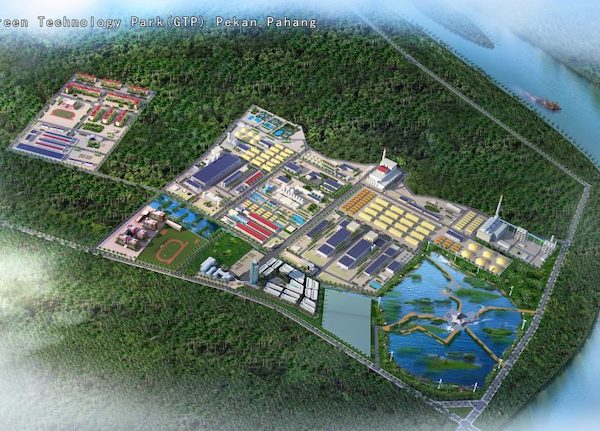
A desktop biodiversity screening was conducted using publicly available information from the Malaysia Biodiversity Information System (MyBIS) and internationally recognised Ramsar Site information to assess the proximity of Nextgreen’s Green Technology Park (GTP) in Pekan, Pahang, to protected and biodiversity-sensitive areas.
The screening was based on the GTP location, which includes existing operations and planned future developments within the 410-acre development area.
The Chini & Ibam Water Catchment Forest was identified as one of the nearest conservation areas to GTP. GTP is located outside the designated area. The available information indicates that treated effluent from the facility is discharged into Sungai Terlang and does not flow directly into the Chini catchment. Based on this desktop assessment, the likelihood of direct impacts on the Chini & Ibam Water Catchment Forest is assessed as very low.
Nextgreen remains committed to responsible environmental management through compliance with applicable requirements and effective wastewater management practices to minimise potential impacts on surrounding ecosystems.
Nextgreen utilizes proprietary technology to upcycle palm oil industry by-products, including Empty Fruit Bunches (EFB) and black liquor, into non-wood paper pulp, organic fertilizer, and animal feed. This reduces pollution from biomass waste disposal and supports sustainable biomass utilisation and circular economy practices in line with the National Biomass Action Plan (NBAP) 2023–2030 led by the Ministry of Plantation and Commodities.
Nextgreen utilises non-wood fibre derived from agricultural biomass waste, particularly EFB, instead of virgin wood fibres. As FSC certification applies to forest-based materials, it is not directly applicable to Nextgreen’s biomass-based raw material source. By reducing dependency on forest-derived materials and timber harvesting, Nextgreen supports biodiversity conservation and reduces pressure on forests and natural habitats.
Traditional open dumping or improper disposal of oil palm biomass can lead to leachate contamination in local water bodies. Nextgreen’s closed-loop processing mitigates this risk.